
Steel Weight Calculator
Estimate the weight of steel bars, pipes, tubes, and plates.
Steel Type
Shape
Quantity
Total Weight
0 kg
Total Weight (lb)
0 lb
Weight per Piece
0 kg
Volume per Piece
0 m³
Density Used
0 kg/m³
What Is a Steel Weight Calculator?
A Steel Weight Calculator is an engineering tool used to estimate the weight of steel components based on their dimensions and the density of steel. It helps engineers, contractors, architects, fabricators, and manufacturers determine the amount of steel required before purchasing, transporting, or installing materials.
The calculator supports a wide range of steel products, making it suitable for both structural and industrial applications.
How to Use the Steel Weight Calculator
Using the calculator is simple.
Step 1
Select the steel shape.
Step 2
Choose your preferred measurement unit.
Step 3
Enter the dimensions.
Step 4
Enter the steel length.
Step 5
Click Calculate.
The calculator instantly displays:
- Steel weight
- Weight per meter
- Weight per foot
- Total weight
- Weight in kilograms
- Weight in pounds
- Weight in metric tons
Steel Shapes Supported
Different steel sections have unique weight calculations. A comprehensive calculator should support:
- Round bars
- Square bars
- Flat bars
- Reinforcement bars (Rebar)
- Steel plates
- Steel sheets
- Hollow sections
- Round pipes
- Square tubes
- Rectangular tubes
- I-Beams
- H-Beams
- Channels
- Angles
- T-Sections
Supporting multiple steel profiles improves usability and satisfies a broader range of search intents.
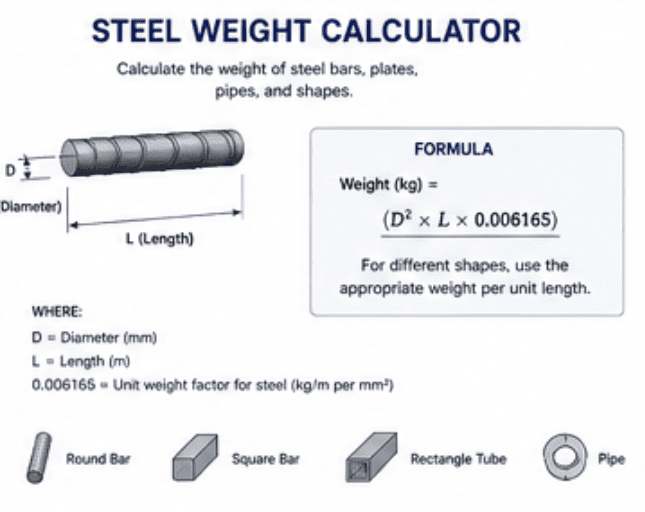
Steel Weight Formula
Steel weight is calculated using the material’s volume and density.
Steel Weight = Volume × Density
Where:
- Volume is calculated from the dimensions of the selected steel shape.
- Density of carbon steel is approximately 7,850 kg/m³.
The calculator performs these calculations automatically and converts the result into your preferred unit.
Steel Density Explained
Steel density is one of the most important values used in weight calculations.
| Material | Approximate Density |
|---|---|
| Carbon Steel | 7,850 kg/m³ |
| Stainless Steel | 7,900–8,000 kg/m³ |
| Cast Steel | 7,700–7,900 kg/m³ |
| Alloy Steel | Varies by composition |
Using the correct density improves calculation accuracy, particularly when working with specialty steels.
Why Use Our Steel Weight Calculator?
Estimating steel weight manually can be complicated, especially when working with different steel shapes, dimensions, and measurement systems. Small calculation errors may lead to inaccurate material orders, increased transportation costs, and unnecessary project expenses.
Our Steel Weight Calculator provides fast, reliable, and consistent calculations for professionals and DIY users alike.
Benefits
- Instant steel weight calculation
- Supports multiple steel shapes
- Metric and imperial units
- Calculates weight in kg, lb, and tons
- Suitable for construction and fabrication
- Reduces material waste
- Improves project estimation
- Mobile-friendly and easy to use
Whether you’re estimating reinforcement for a building or preparing materials for a fabrication workshop, this calculator helps simplify the planning process.
Frequently Asked Questions
How is steel weight calculated?
Steel weight is determined by multiplying the material’s volume by its density. The calculator automates this process for different steel shapes.
Can I calculate rebar weight?
Yes. The calculator supports reinforcing bars by using their diameter and length.
Does the calculator support metric and imperial units?
Yes. You can enter dimensions in metric or imperial units and receive results in kilograms, pounds, or metric tons.
What density does the calculator use?
Standard carbon steel calculations generally use a density of 7,850 kg/m³. Specialty steels may have different densities.
Why is steel weight important?
Knowing the correct weight helps estimate material costs, transportation requirements, structural loads, and fabrication needs.
Conclusion
Accurate steel weight estimation plays a critical role in construction, engineering, fabrication, and manufacturing. Our Steel Weight Calculator simplifies the process by calculating the weight of bars, pipes, plates, beams, channels, angles, and other steel sections using standard engineering principles. Whether you’re estimating materials for a residential project or planning steel requirements for a large industrial structure, this calculator provides fast, reliable, and practical results to support better decision-making.