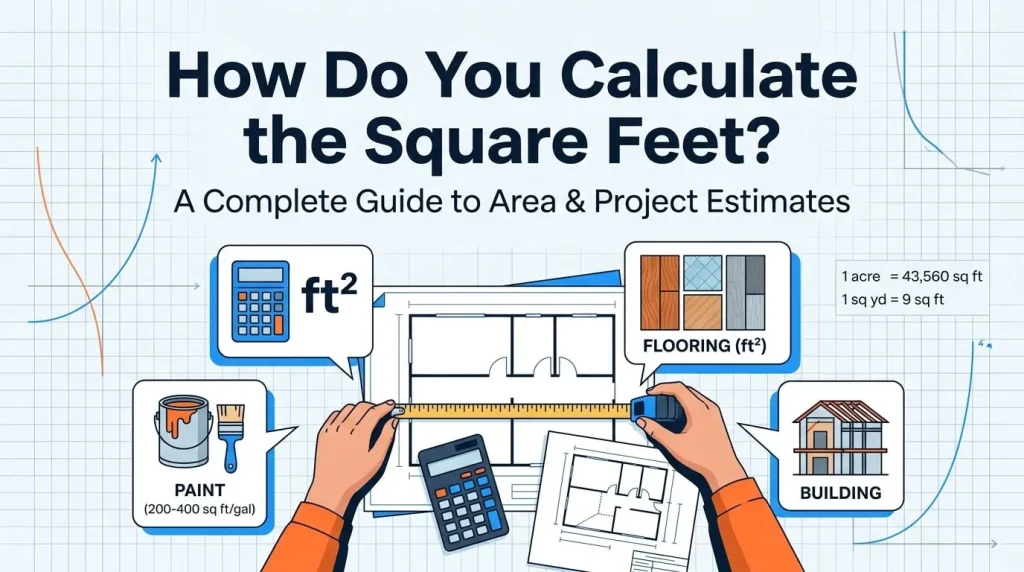
How Do You Calculate the Square Feet? A Complete Guide to Area & Project Estimates
Whether you are planning to paint a house, install new flooring, or build a home from the ground up, knowing how to calculate the square feet of your space is essential. Accurate measurements ensure you purchase the right amount of materials, get fair price quotations from contractors, and avoid unexpected labor costs.
At Construction Toolkit, we aim to make project planning straightforward. This guide breaks down the simple math behind square footage calculations, common conversion factors, and practical ways to estimate cost per square foot for major home renovation projects.
The Basic Formula to Calculate Square Feet
Calculating square footage for standard rectangular or square spaces requires two simple measurements: length and width in feet.
Square Feet = Length (feet) * Width (feet)
For example, a room that measures 15 feet long by 12 feet wide has an area of 180 square feet.
Measurement Conversion Reference Table
If your project measurements are provided in acres, square yards, or meters, use this reference table from Construction Toolkit to determine the exact total area in square feet:
| Unit of Measurement | Equivalent in Square Feet |
| 1 Acre | 43, 560 sq ft |
| 1 Square Yard | 9 sq ft |
| 1 Square Meter | 10.76 sq ft |
| 1 Square Inch | $0.00064516 sq ft |
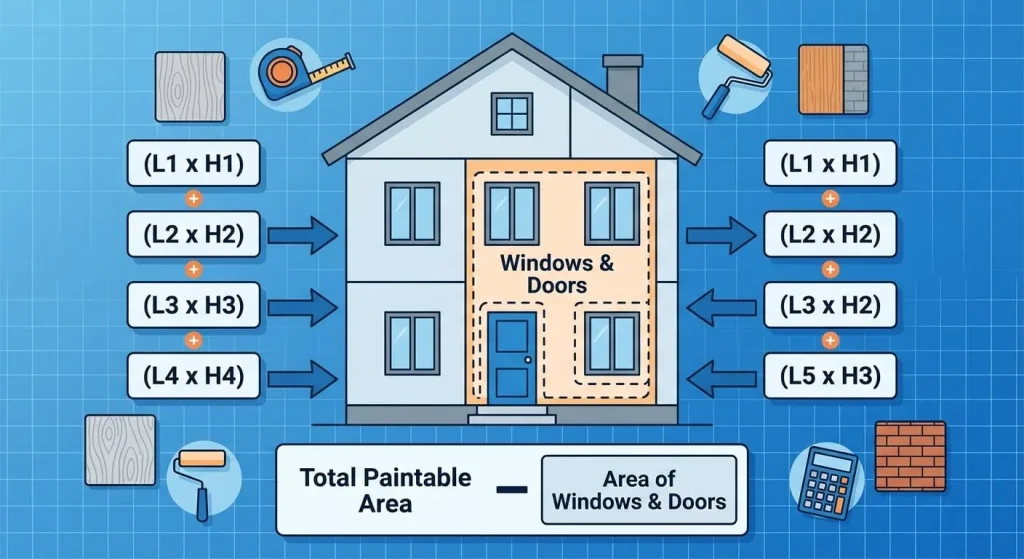
How to Calculate Square Feet for Home Painting Projects
Professional house painters typically base their price quotations directly on total surface square footage. Accurate measurements help you determine paint volume, whether hiring contractors or taking on a DIY job.
Key Cost and Material Considerations
Paint Coverage Rates: Standard paint and primer generally cover between $200\text{ and }400\text{ square feet}$ per gallon, depending on application methods, surface texture, and brand quality.
Surface Preparation & Priming: Rough or porous surfaces like raw wood, metal, or plastic require paint primer to help topcoats adhere effectively. Primer typically covers less area than finishing coats.
Total Material Costs: A complete project estimate includes secondary supplies like brushes, drop cloths, turpentine, mixing supplies, and cleanup materials.
Labor Costs: Professional quotes factor in preparation, mixing, applying, and surface repair alongside raw square footage.
Calculating Square Footage for Flooring Installation
Flooring costs vary depending on the chosen material, quality grade, and structural installation needs. Calculating floor square footage ensures accurate material ordering while minimizing waste
1. Wood Flooring Options
Hardwood Flooring: Offers high durability, easy cleaning, and long-term versatility for interior design. It requires ongoing maintenance like sanding and refinishing over time.
Engineered Wood Flooring: Constructed from multiple inner layers (such as plywood and high-density fiberboard) with a real hardwood top layer. Engineered wood delivers superior heat and moisture resistance compared to solid hardwood and is often cheaper to purchase and install.
Bamboo Flooring: Classified as a grass, bamboo is moisture-resistant, easy to maintain, and eco-friendly. While generally cheaper than traditional hardwoods, it is susceptible to scratching from furniture, heels, or pet claws.
2. Laminate Flooring
Laminate combines plywood or fiberboard cores with a plastic laminate top layer designed to mimic hardwood.
Pros: Highly durable, scratch-resistant, stain-proof, and budget-friendly. It can often be installed directly over existing flooring, cutting down on removal fees.
Cons: Cannot be sanded, refinished, or stained. If damaged, full floor replacement is required, which can impact home resale value compared to traditional hardwoods.

3. Tile Flooring
Tile flooring offers an exceptionally wide price spectrum—ranging from $0.60 square foot to hundreds of dollars per square foot for premium materials like marble tile or specialty glass.
| Tile Type | Key Benefits | Drawbacks to Consider |
| Ceramic & Glass | Versatile styles, easy cleanup, suitable for high-moisture areas | Fragile if heavy objects drop; slippery when wet |
| Concrete & Natural Stone | Highly durable, ideal for heavy foot traffic | Cold without underfloor heating; does not dampen sound |
Estimating Cost Per Square Foot When Building a Home
Unlike flooring or painting—where costs scale directly with surface area—building a home involves non-linear cost variables.
Factors Influencing Construction Costs
While reviewing building plans and touring reference homes helps establish target square footage, total construction expenses depend heavily on structural and regulatory choices:
Structural Factors: Foundation type, roof pitch, and architectural complexity.
Luxury Features: Custom additions like curved staircases, marble tiles, or an elegant master bath significantly raise cost per square foot relative to home size.
Extraneous Fees: Total budgets must account for local authority fees, building code compliance requirements, specialized labor, and site insurance.
Frequently Asked Questions (FAQs)
How do I calculate square feet for an irregular room?
Break the room down into smaller, standard shapes (rectangles or squares). Calculate the square footage for each separate section using Length * Width, then add all section totals together.
How do I calculate square feet into square yards?
Divide your total square footage by 9. For example, an 180 sq ft room equals 20 square yards (180 / 9 = 20).
How much extra material should I buy for flooring installation?
Add a 10% to 15% waste factor to your total square footage calculation. This accounts for cutting waste, board trimming, and future repairs.